
“I feel like I’m 80 when I get out of bed.”
“My doctor told me not to squat because of my knees.”
“I’m too old to run.”
“I feel like I’m going to fall.”
“I pee a little when I laugh or sneeze.”
Sound familiar?
As we get older, it’s easy to start accepting aches, pains, stiffness, and changes in physical function as an inevitable part of aging. But here’s the thing: Just because something is common as we age doesn’t mean you have to live with it!
From morning stiffness and knee pain to balance problems and urinary leakage, physical therapy can help address many of the physical changes that interfere with your daily life.
At Release Physical Therapy in Washington, DC, we help adults stay strong, active, and independent through individualized physical therapy programs designed around their goals.
Here are five things we hear all the time from patients who think they’re just getting old.
1. “I Feel Like I’m Old When I Get Out of Bed!”
Do you feel like the Tin Man when you first get out of bed? Does it take a few minutes of walking around before your back, hips, or knees start feeling normal?
Morning stiffness can become more noticeable with age. This may be related to reduced movement during sleep, changes in joint tissues, osteoarthritis, or underlying musculoskeletal conditions.
While some morning stiffness is common, persistent stiffness or pain that limits your ability to move comfortably deserves attention.
The good news? Movement can help!
A simple morning mobility routine can help ease stiffness and get your body moving before you start your day.
Try incorporating a few of these exercises:
- Cat-Cow: Gently move your spine between flexion and extension to improve spinal mobility.
- Open Books: Rotate through your upper back to improve thoracic mobility.
- Lumbar Trunk Rotations: Gently rotate your lower back while lying on your back.
- Single or Double Knee to Chest: Bring one or both knees toward your chest to gently move your lower back and hips.
Perform these movements slowly and comfortably, without forcing painful ranges of motion.
If your morning stiffness is persistent, worsening, or accompanied by significant pain, a physical therapist can help determine what may be contributing to your symptoms.
2. “My Doctor Told Me Not to Squat Because of My Knees!”
Do you experience knee pain when bending down, walking downstairs, squatting, or getting up from a chair?
Many people assume knee pain is simply a result of aging or arthritis. While osteoarthritis can certainly contribute to knee pain, weakness, reduced load tolerance, and changes in mobility can also play a role.
Here’s something we want you to remember: Squatting is a functional movement, not something you need to avoid just because you’re getting older!
Think about how often you squat throughout the day:
- Sitting down and getting up from a chair
- Getting on and off the toilet
- Picking something up from the floor
- Playing with your grandchildren
- Getting in and out of your car
Avoiding these movements altogether can contribute to further weakness and reduced function.
Physical therapy can help identify what’s contributing to your knee pain and develop a progressive strengthening program to improve your ability to tolerate everyday activities.
Depending on your individual needs, treatment may include:
- Targeted quadriceps, hamstring, and glute strengthening
- Functional squat and stair training
- Manual therapy and mobility exercises
- Dry needling
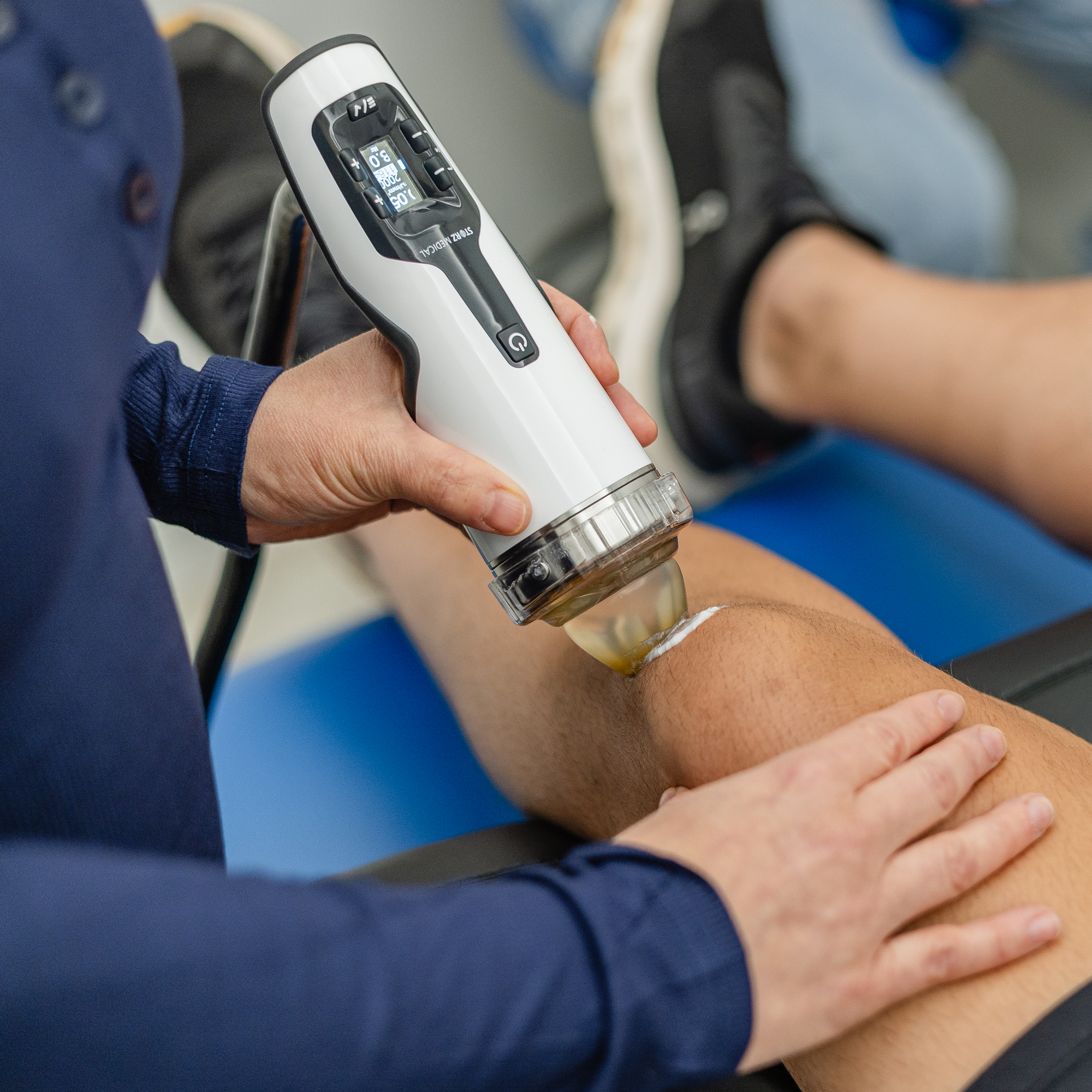
- Focal or radial shockwave therapy when clinically appropriate
- K-Laser treatment when appropriate
Our goal isn’t simply to reduce your knee pain. It’s to help you regain the strength and confidence to squat, climb stairs, exercise, and participate in the activities you enjoy.
3. “I’m Too Old to Run!” (Or Try a New Exercise)
Who decided that running, strength training, or trying a new fitness class isn’t for you?
Whether you want to return to running, start lifting weights, try a Zumba class, or simply walk longer distances without discomfort, physical therapy can help you prepare your body for those activities.
As we age, maintaining muscle strength, cardiovascular fitness, joint mobility, and overall physical function becomes increasingly important.
A physical therapist can assess:
- Hip, knee, and ankle strength
- Lower-extremity mobility
- Single-leg stability
- Balance and coordination
- Functional movement patterns
- Exercise tolerance and training capacity
From there, we can develop an individualized program to help you safely return to exercise and build the strength needed for long-term fitness.
4. “I Feel Like I Might Fall!”
Do you feel unsteady when walking on uneven surfaces, going up and down stairs, or standing on one leg?
Balance can become more challenging as we age, increasing the risk of falls and sometimes causing people to avoid activities they once enjoyed.
But balance isn’t something you simply lose and have to accept. It can be assessed and trained!
Balance depends on several systems working together, including:
- Vision: Your eyes provide information about your surroundings and help your brain understand where your body is in space.
- Vestibular system: Located in your inner ear, this system helps regulate balance and spatial orientation.
- Proprioception: Sensory receptors in your muscles and joints help your brain understand your body’s position and movement.
- Muscular strength: Your legs and core help you maintain stability and respond to changes in your environment.
When one or more of these systems isn’t functioning optimally, you may experience balance difficulties.
Physical therapy can help identify contributing factors and develop a personalized balance and fall-prevention program.
Treatment may include:
- Single-leg balance exercises
- Tandem stance and walking
- Dynamic balance activities
- Lower-extremity strengthening
- Gait training
- Vestibular rehabilitation when appropriate
Improving balance isn’t just about preventing falls. It’s about feeling confident walking, traveling, exercising, and staying independent.
5. “I Pee a Little When I Laugh or Sneeze!”
Do you leak a little urine when you laugh, sneeze, cough, jump, or exercise?
This is commonly referred to as stress urinary incontinence, and while it is common, it is not normal. Urinary leakage can occur when the pelvic floor muscles and supporting structures aren’t adequately managing increases in pressure within the abdomen.
Interestingly, pelvic floor dysfunction isn’t always caused by weakness. Some individuals have pelvic floor muscles that are overly tight, poorly coordinated, or unable to relax and contract appropriately.
This is why doing Kegels isn’t necessarily the answer!
Pelvic floor physical therapy can help identify what’s contributing to urinary leakage through an individualized evaluation of pelvic floor muscle strength, coordination, relaxation, and function.
Depending on your needs, treatment may include:
- Pelvic floor strengthening
- Pelvic floor relaxation and down-training
- Diaphragmatic breathing
- Core and abdominal strengthening
- Bladder retraining strategies
- Manual therapy when appropriate
- Functional exercises to improve coordination during coughing, sneezing, lifting, and exercise
Whether you’re experiencing postpartum urinary leakage or symptoms that have developed later in life, pelvic floor physical therapy can help you regain confidence and improve your quality of life.
You Don’t Have to Accept Every Ache, Pain, or Limitation as Part of Aging
Getting older is inevitable. Losing your strength, mobility, confidence, and independence doesn’t have to be.
Whether you’re experiencing morning stiffness, knee pain, difficulty returning to exercise, balance problems, or urinary leakage, physical therapy can help identify what’s contributing to your symptoms and create a plan to get you moving better.
At Release Physical Therapy in Washington, DC, we provide individualized, one-on-one physical therapy focused on helping you return to the activities you love.
Don’t settle for “I’m just getting old.” Let’s work on getting you back to feeling like YOU.
Ready to get started? Schedule an appointment with Release Physical Therapy today!