
Most runners think the key to getting faster is simple: Run more miles.
But here’s what we see every day in the clinic:
More miles without any added strength training results in more injuries.
If you’ve dealt with shin splints, IT band pain, plantar fasciitis, hip tightness, or recurring “niggles,” it’s rarely a running problem.
It’s usually a strength problem.
At Release Physical Therapy, we prioritize helping runners stay healthy and perform better by combining manual therapy and strength training.
Why Runners Need Strength Training
Running is essentially a series of single-leg hops — lots and lots of them, with a lot of force behind each one.
Every step places 2–3x your body weight through your hips, knees, and feet.
If your muscles don’t help to absorb that load efficiently, your joints and tendons take the hit.
That’s when injuries show up.
Strength training helps you:
- Reduce injury risk
- Improve running performance
- Increase power and speed
- Maintain form
- Decrease aches and tightness
- Run longer without breakdown
The Most Common Weak Links in Runners
At Release Physical Therapy, we treat lots of runners and we consistently see the same issues:
- Weak glutes
- Poor hip stability
- Undertrained hamstrings
- Stiff ankles and tight calves
- Limited core control
- Poor pelvic or rib “stack” posture
When these areas are weak, your body compensates with:
- Knee pain
- IT band irritation
- Shin splints
- Achilles pain
- Low back tightness
- Pelvic floor symptoms (leaking or heaviness)
The fix? Strengthen. We often hear runners say they stretch all the time and it doesn’t get better, but usually we need to strengthen tight muscles to improve symptoms, not stretch them.
The 5 Must-Train Areas for Runners
1. Glutes (your primary engine)
Strong glutes = better propulsion and less knee stress
Exercises:
- Hip thrusts or glute bridges
- Bulgarian split squats
- Step-ups
- Lateral band walks
- Single-leg RDLs
2. Hamstrings (deceleration + power)
Protects knees and improves stride efficiency
Exercises:
- Romanian deadlifts (RDLs)
- Single-leg deadlifts
- Nordic hamstring curls
- Stability ball curls
3. Calves & Ankles (shock absorption)
Critical for push-off and preventing Achilles/plantar fasciitis pain
Exercises:
- Single-leg calf raises (straight + bent knee)
- Eccentric heel drops
- Jump rope
- Pogos/light hops
4. Core & Pelvic Control (stability)
A stable trunk lets your legs generate more power
Exercises:
- Dead bugs
- Side planks
- Pallof presses
- Farmer carries
- Bear crawls
(Important posture tip: ribs stacked over pelvis → better force transfer → smoother stride)
5. Single-Leg Strength (running specificity)
Because running happens one leg at a time
Exercises:
- Split squats
- Reverse lunges
- Single-leg squats to box
- Step-downs
- Skater hops
Sample Strength Workout for Runners (~30 minutes)
Perform 2–3x per week
Warm-up (5–7 min)
- Dynamic lunges
- Glute bridges
- Leg swings
- Calf raises
Strength Block
3 sets each:
- Bulgarian split squats – 8–10/side
- Single-leg RDL – 8–10/side
- Hip thrusts – 10–12
- Side plank – 30–45 sec/side
- Single-leg calf raises – 12–15
Power/Control Finisher
- Skater hops x 20
- Dead bugs x 10/side
When Should Runners Lift?
We recommend:
- 2–3 strength days per week
- 30–60 minutes per session
- Lift after easy runs or on cross-training days
- Avoid heavy lifting right before speed workouts or races
Consistency beats intensity.
You don’t need to crush yourself, but you do need to strength train regularly.
What About Stretching?
Stretching feels good, but it doesn’t fix weakness.
If you constantly feel “tight,” it’s often your body guarding an unstable area, which means you need strengthening!
Mobility is important too, but mobility isn’t necessarily stretching.
Try these dynamic mobility exercises instead of static stretching:
- World’s Greatest Stretch x 10 per side
- Hip 90/90 switches x 10 per side
- Bootstrappers x 10
Physical Therapy + Strength = Smarter Running
Generic workouts help.
Personalized plans work better.
At Release Physical Therapy, we evaluate:
- Running mechanics
- Strength asymmetries
- Mobility limitations
- Core and pelvic control
- Load tolerance
Then we build a plan designed just for you and your needs.
At Release Physical Therapy, your treatment sessions are 55 minute one-on-one treatments and you also have the following available to you:
- Manual therapy
- Dry needling
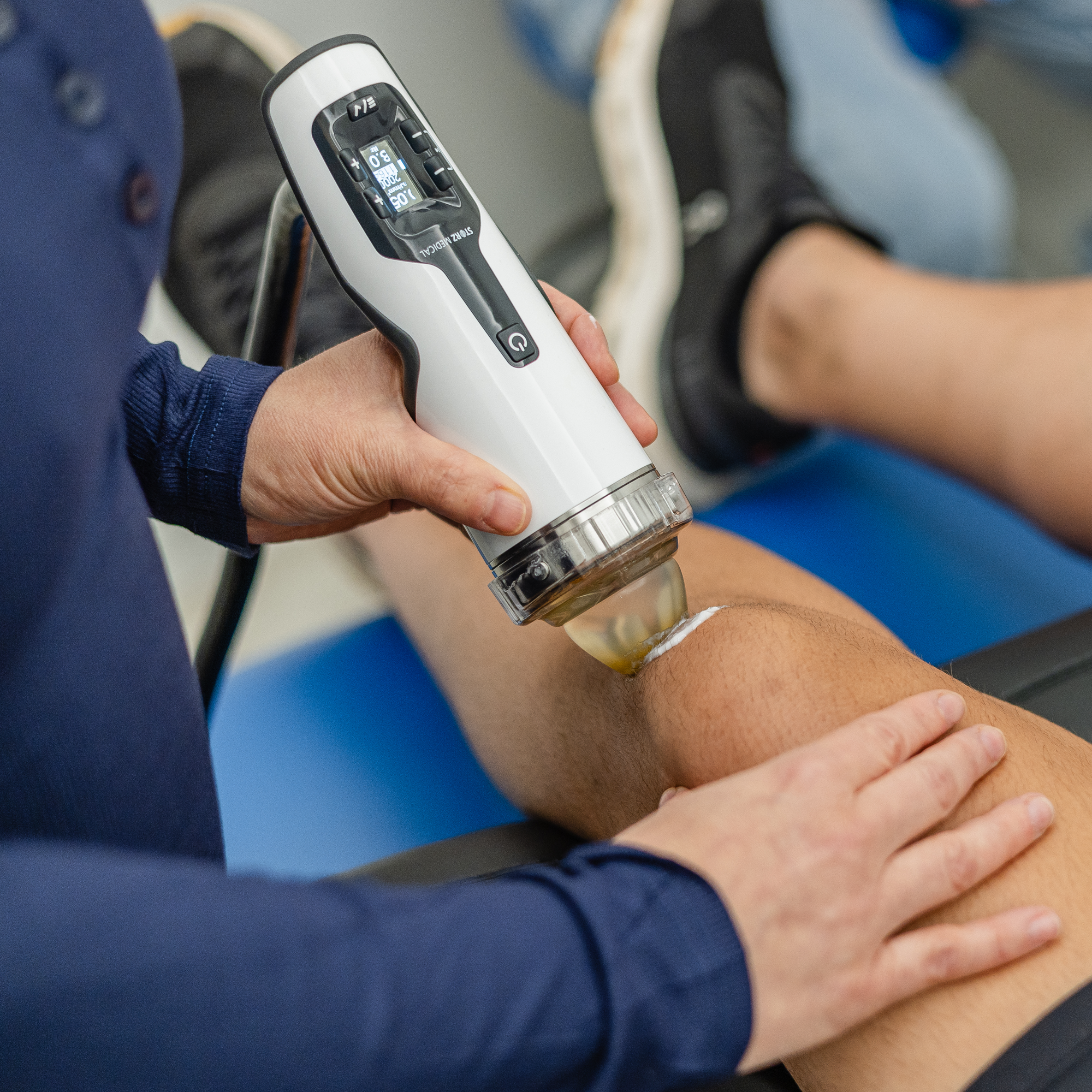
- Shockwave
- Gait analysis
- Return-to-run progressions
Because healthy running isn’t just about miles. Strength training is essential to improving your longevity as a runner.
Ready to Level Up Your Running?
If you’re tired of nagging injuries or want to train smarter, our physical therapists can help you build strength, improve mechanics, and keep you running for the long haul.
Book an evaluation today and let’s make you a stronger runner.